Bookey Best Book Summary App
Bookey: Unlock big ideas from bestsellers in 30 mins audio, text, and mind map https://www.bookey.app/
Listen on:









Episodes

Friday Dec 30, 2022
Friday Dec 30, 2022
The 7 Habits of Highly Effective People Full Summary and Review by Stephen Covey
This book, as the title says, is about the seven habits of highly effective people. It teaches us how to achieve victory from the private to the public spheres, thereby making a tremendous change in life and career, and attaining both success and happiness. Known as the “Bible” of the American business community and government management department, the book is included in the training course of the Fortune Global 500 corporations, and is ranked by Forbes as one of the ten most influential management books in history.
Overview | Chapter 1
Hi, welcome to Bookey. Today we will unlock the book The 7 Habits of Highly Effective People: Powerful Lessons in Personal Change. It’s mainly about how to become a highly effective person, and attain both success and happiness. Many of us have shared an experience of having so many things to do every day, and feeling that time is not enough. Despite working all day long and feeling exhausted at the end of the day, we can’t seem to get all the work done. However, there are some people around us who barely work overtime, but still do a great job. They can even enjoy some leisure time. Why is that? Are they born with a higher IQ? The truth? This is because some of them have developed good habits of high effectiveness, which leads to a comfortable yet highly effective life. Perhaps you are wondering: what is high effectiveness? High effectiveness refers to the balance between production and production capacity, which is referred as the P/PC balance in this book. P stands for production, and PC stands for production capacity. Have you heard of the fable about the goose and the golden egg? A farmer has a goose that can lay golden eggs, and he soon becomes fabulously rich. However, the greedy farmer becomes unsatisfied with only one golden egg per day, so he kills the goose, hoping to take out all of the golden eggs from it. To his surprise, there are no golden eggs inside the goose. The goose is dead, so there’s no way he can get another golden egg. The farmer has ruined everything for himself. In the above fable, what is produced is the golden eggs, and production capacity, namely, the producing asset or capacity to produce, is the goose that lays golden eggs. If we “focus on golden eggs and neglect the goose,” we will lose both the goose and the eggs. Conversely, if we “only take care of the goose with no aim toward the golden eggs,” we can feed neither ourselves nor the goose. Therefore, only when you take good care of the goose can you get golden eggs. And only when you control your desire to ask too much from the goose can you keep it alive. Likewise, only when you strike a balance between work performance and well-being, can you attain real effectiveness and make greater achievements. This book tells us exactly the specific ways that can help you easily achieve high effectiveness. The author of this book, Stephen Covey, was a world-renowned management guru and a well-respected leadership authority. He has a high and long-standing reputation in leadership theories, family and interpersonal relationships, and personal management. Recognized as “a master of thoughts” of the American academic community, Covey was named “one of the twenty-five most influential people in American history” and “a mentor of human potential” by Time magazine. The 7 Habits of Highly Effective People: Powerful Lessons in Personal Change, is also known as the “Bible” of the American business community and government management department. It’s ranked as one of the ten most influential management books in history by Forbes. It will teach you seven good habits. These habits will help you become successful and highly effective with little struggles, achieve personal and interpersonal effectiveness, and make a tremendous change in your life and career.

Friday Dec 30, 2022
Friday Dec 30, 2022
Rich Dad Poor Dad Full Summary and Review by Robert T. Kiyosaki
You probably have a stable and decent job, but you do not dare to rest for a second, because you are afraid that, should there be an unexpected accident, you will lose everything you have. How can you become a truly rich person, who does not have to worry about livelihood and can make financial freedom a reality? This book will tell you this: being hardworking is not enough; you also need a bit of financial intelligence. This book is just about to help you develop your financial intelligence and understand the secrets behind the mindset of the rich.
Overview | Chapter 1
Hi, welcome to Bookey. Today, we will unlock the book Rich Dad Poor Dad, a groundbreaking book in the field of money management. You probably already have a stable and decent job, but you do not dare to rest for a second, because you are afraid that, should there be an unexpected accident, you will lose everything you have. How can you become a truly rich person, who does not have to worry about making ends meet and can make financial freedom a reality? This book will tell you this: being hardworking is not enough; you also need a bit of financial intelligence. This book is about to change the way you think about wealth and teach you how to think like the rich, paving the way to your financial freedom. The author of this book, Robert T. Kiyosaki, is known as ‘The Godfather of Millionaires’ and ‘The Money Coach’. He is a popular financial expert. Through fun stories featuring him and ‘two dads’, he shows us the collision between two contrasting mindsets about money. The ‘poor dad’ (in the story) is Robert’s biological father. He is a well-educated man with a Ph.D. degree as well as a stable job and a decent income. However, he is often caught in debt. The poor dad represents the mindset of most people who do not know how to deal with money. The rich dad is his friend Mike’s dad. He is an entrepreneur who did not graduate from high school. Although ‘rich dad’ does not have deep expertise, he has excellent skills in managing money. The rich dad is the teacher of the author, Robert, in money management. He represents the mindset behind accumulating wealth successfully and becoming rich. He will teach you the concept of wealth that you must have to become a wealthy person. In this bookey, we will walk through the following three aspects with you. Firstly, think like the rich. Secondly, learn how to tell the difference between an asset and a liability. Thirdly, invest like the rich.

Thursday Dec 29, 2022
Thursday Dec 29, 2022
How to Win Friends and Influence People Book Summary and Notes
A practical work on interpersonal relations, this book takes an in-depth look at human nature and taps into the hidden weaknesses of humanity. Through reading this book, one can get to know more about themselves and make further self-improvements. This book became a worldwide bestseller immediately after its debut. It has been translated into almost every major language in the world within decades of its release. It’s hailed as the bible of social skills. In 2011, it was number 19 on Time Magazine's list of the 100 most influential books.
Overview | Chapter 1
Hi, welcome to Bookey. Today we’ll unlock the book How to Win Friends and Influence People. Many of us are familiar with or have even read this book. It has continued to gain popularity and receive acclaim from readers around the world. It has also been published in many editions. Data shows that this book has sold tens of millions of copies worldwide, a truly remarkable number in the history of publication. It provides people with guidelines for dealing with others, in addition to sharing many ideas about how to live a happy life. Numerous people have benefited from it. Ever since Carnegie revealed the secret to harmonious relationships to many people around the world, other books on the subject of interpersonal relationships have emerged. Due to his enormous influence, Carnegie has been praised as one of the greatest experts in self-help and interpersonal relationships. It may be hard to imagine that, while Carnegie is now a revered mentor in the self-help industry, he used to suffer a lot from his inability to effectively deal with people. Carnegie was not born a genius of social skills. He learned from his own personal experiences and turned them into assets. Carnegie was born in the 1880s in a small town in Missouri. His family was poor, so he was always hungry and cold. Due to malnutrition, little Carnegie was rather skinny and short, making his ears, which were disproportionately big compared to his head, seemed even larger. Because of his big ears, little Carnegie was often teased by his classmates. One day, he got into a fight with a boy in his class. He said something very mean to the boy, who became so furious that he threatened to cut off Carnegie’s ears. Carnegie was terrified. In the next few days, he kept worrying about his ears being cut off. He was even too scared to fall asleep, fearing that his ears would be cut off in his dreams. But this was not his only concern. When he was a kid, Carnegie would dwell on anxieties to the point of tears. He worried about so many absurd things, for example, being buried alive like a seed, getting killed by a lightning strike, or going to hell after dying. He also worried that no girl would ever want to marry him, or that he would be kidnapped by aliens. Later on, Carnegie realized that most people’s worries were not necessary, because there was a 99% chance that they wouldn’t happen. After a long period of anxiety and lack of confidence when growing up, he attended the State Teachers’ College in Warrensburgh, Missouri. Here, he took an interest in debating, and became very fond of it. So, he attended debates and public speaking competitions frequently, painstakingly honing his speaking skills. He won the majority of contests in which he participated, and gained great confidence from giving speeches. Gradually, he realized that this could be his life-long career. Afterward, Carnegie started to give inspirational speeches around the world. He wrote many self-help books, like How to Win Friends and Influence People, How to Stop Worrying and Start Living, and How to Enjoy Your Life and Your Job. His courses teaching interpersonal skills started to be held around the world. A worried little boy with low self-esteem finally became the great mentor of self-help we know today.

Wednesday Dec 28, 2022
Wednesday Dec 28, 2022
Atomic Habits Book Summary and Review
Why do so many of us fail to lose weight? Why can't we go to bed early and wake up early? Is it because of a lack of determination? Not at all. The thing is, we are doing it the wrong way. More specifically, it's because we haven't built an effective behavioral system. James Clear finds that it takes four steps to form a habit. Cue, craving, response, and reward are the pillars of every habit. This book summarizes the four laws that correspond to the four steps to help you quickly build good habits or, counterintuitively, break bad ones.
Overview | Chapter 1
Hi, welcome to Bookey. Today we'll unlock the book Atomic Habits: An Easy & Proven Way to Build Good Habits & Break Bad Ones. Imagine you're sitting in a plane, flying from Los Angeles to New York City. Due to a mysterious and undetectable turbulence, your aircraft's nose shifts more than 7 feet, 3.5 degrees to the south. After five hours of flying, before you know it, the plane is landing. However, it’s not landing in New York City, but in Washington Dulles International Airport, which is 225 miles from your destination! A minimal change over time can make a significant difference, and the direction of an airplane is a straightforward example. In the same way, a slight change in your daily habits can steer your path to a completely different destination. That's the incredible power of habits. Everyone wants to control their lives and not be led by the nose by bad habits. We'll make New Year's plans, vow to lose weight or quit smoking, keep reading or running, but these resolutions will often come to naught. Is it because of a lack of determination? No, we are doing it the wrong way. More specifically, it's because we haven't built an effective behavioral system. James Clear finds that it takes four steps to form a habit. Cue, craving, response, and reward are the pillars of every habit. This book summarizes the four laws that correspond to the four steps to help you quickly build good habits or break bad ones. There isn't just one way to develop good habits, but this book presents an ideal path the author knows. It's suitable for everyone who is seeking a step-by-step approach. The author of this book is James Clear, a habit researcher and author of the New York Times bestseller. Over 500,000 people subscribe to his email newsletter, and his website receives millions of visitors each month. Clear is the founder of the famous The Habits Academy, which is the leading platform for individuals and organizations that are interested in developing better habits in life and work. More than 10,000 leaders, managers, teachers, and coaches have graduated from The Habits Academy.

Thursday Dec 01, 2022
Thursday Dec 01, 2022
The Little Prince Full Summary and Review by Antoine de Saint-Exupéry
The Little Prince is a children’s story that touches even the adults’ hearts, as the author said, “All grown-ups were once children.” From the point of view of a pilot, the book recounts the journey of a young prince who travels to Earth from an alien planet. The irony, fantasy, truth, and philosophy embedded in the story have made it one of the most famous children’s books in France and later across the world. It is hailed as one of the most read books after the Bible.
Overview | Chapter 1
Hi, welcome to Bookey. Today we will unlock the book The Little Prince. In the 1940s, World War II swept the world. It brought not only chaos, but also spiritual decline. German philosopher Martin Heidegger described the era as “the destitute time” and “the time of world’s night”. When the darkness descended upon the people in the turbulent age, how should they free themselves from the difficult circumstances? Famous French writer and aviator Antoine de Saint-Exupéry gave his answer in The Little Prince. Both a writer and a pilot, Saint-Exupéry was not the first who wrote about aviation, but he was the first author to explore life and civilization through aviation. In his works, Saint-Exupéry was committed to re-explore spiritual life, which he believed was above intelligence and in line with human needs; it would guide people in their journey of self-discovery and lead to their true essence. In the wake of the war, people, devastated, craved warmth and wisdom to comfort the anguish and vulnerability of their souls. It was where The Little Prince came in. To this day, this book still serves the purpose as the author wished: to nourish people’s souls. It is a timeless story that remains a solace to us all. The Little Prince is a children’s story that touches even the adults’ hearts, as the author said, “All grown-ups were once children.” From the point of view of a pilot, the book recounts the journey of a young prince who travels to Earth from an alien planet. The irony, fantasy, truth, and philosophy embedded in the story have made it one of the most famous children’s books in France and later across the world. It is hailed as one of the most read books after the Bible. The young blond prince with melancholy eyes and a long scarf that flutters in the wind crosses the vast desert and into our hearts, bringing generations of readers a beautiful tale and the wisdom it contains.
Thursday Dec 01, 2022
Thursday Dec 01, 2022
The Alchemist Full Summary and Review by Paulo Coelho
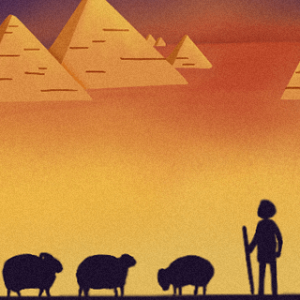
A young shepherd named Santiago has a recurring dream, in which he sees a treasure hidden at the Egyptian pyramids. To seek the treasure, the boy sells his sheep and embarks on a strenuous journey, crossing the Sahara Desert. Throughout his trip, he experiences a series of strange encounters. Under the guidance of an alchemist, he reached the pyramids, only to discover where the treasure really was. In the end, he has managed to gain wealth and find his true love, turning the dream he sought all along into reality.
Overview | Chapter 1
Hi, welcome to Bookey. Today we will unlock the book The Alchemist. The story begins when a young shepherd named Santiago has a recurring dream, in which he sees a treasure hidden at the Egyptian pyramids. To seek the treasure, the boy sells his sheep and embarks on a strenuous journey, crossing the Sahara Desert. Throughout his trip, he experiences a series of strange encounters. Under the guidance of an alchemist, he reached the pyramids, only to discover where the treasure really was. In the end, he has managed to gain wealth and find his true love, turning the dream he sought all along into reality. Known as one of the few internationally acclaimed literary works, this book has been translated into 68 languages and holds a Guinness World Record as the most translated book by a living author. Being sold over 35 million copies in 160 countries, it is one of the best-selling books of all time. With a broad, compassionate, and unique perspective as well as crystal-clear writing, Coelho combines philosophical ideas, religious miracles, and fables. His novel has moved not only the common people across the world, but also powerful politicians, famous celebrities, and entrepreneurs, garnering hundreds of millions of readers. Even those who are illiterate are drawn to the wondrous world he depicted. In 2007, due to the influence of his works, Coelho became a UN Messenger of Peace. Next, let us explore Santiago’s adventure from four different angles: Part One, a shepherd’s treasure hunt; Part Two, Santiago’s secrets to success; Part Three, symbolism; Part Four, love is the essence.